Mary Gilmore, Staff Writer
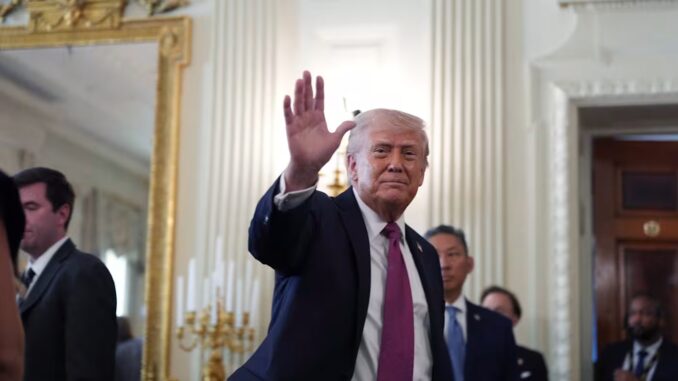
President Donald Trump has signed an executive order aimed at accelerating the federal review of psychedelic drugs for mental health treatment. This marks a significant shift in United States policies toward substances considered off-limits for medical use.
President Trump’s executive order directs federal agencies to speed up research, review, and access pathways for psychedelic compounds. One substance especially being studied is ibogaine, a psychoactive substance derived from an African shrub that has drawn increasing interest for its potential to treat conditions such as PTSD, depression, and addiction. The order allows the Food and Drug Administration to issue National Priority Vouchers for three psychedelics, enabling faster approval for drugs that align with national health priorities.
The executive order represents a departure from decades of federal restrictions on psychedelics, many of which remain classified as Schedule I substances. While the order does not grant FDA approval or immediate access to these drugs, it signals a willingness by the federal government to explore their therapeutic potential. According to Time, experts are noting that this level of presidential attention to psychedelics is “pretty unprecedented,” reflecting shifting attitudes toward substances.
Under the order, the Department of Health and Human Services will allocate $50 million through the ARPA-H program to match state-level investments in psychedelic research. This funding aims to support studies targeting serious mental illnesses, including treatment-resistant depression and PTSD. The FDA and Drug Enforcement Administration are also directed to create pathways for eligible patients to access investigational psychedelic drugs under the Right to Try Act, which allows individuals with life-threatening conditions to seek experimental treatments.
A major emphasis of the initiative is addressing the mental health crisis among US veterans. Trump highlighted the high rates of suicide and treatment-resistant conditions in this population. He noted that many veterans have reported profound improvements after receiving ibogaine treatment abroad. Veteran advocates and public figures, including former Navy SEAL Marcus Luttrell and podcaster Joe Rogan joined Trump at the signing ceremony.
Research cited by the administration includes a 2024 Stanford University study showing promising results for ibogaine in treating traumatic brain injuries among combat veterans. Participants in the study described the treatment as life changing, reporting significant reductions in symptoms with no serious side effects.
Following the executive order, the FDA announced it would speed up review for three psychedelic therapies. These drugs will be evaluated under the Commissioner’s National Priority Voucher program, which aims to shorten approval times for high-priority treatments.
Despite the enthusiasm, experts urge caution. While psychedelic-assisted therapy has shown promise, significant questions remain about safety and long-term outcomes. Ibogaine, in particular, carries known cardiovascular risks and has not yet undergone large-scale clinical trials in the United States. The executive order does not bypass the need for rigorous scientific evaluation, and researchers stress that accelerated review does not guarantee approval.
Leave a Reply